June 16, 2013

Kape Vinta Blend


Kape Vinta Blend launched in 1998 when Starbucks opened its first store in the Philippines. This coffee blend consist of beans from the Philippines and Indonesia. Originally Kape Vinta blend was only available in the Philippines. Majority of coffee in the Phillipines is in the mountain areas of Batangas, Bukidnon, Benguet, Cavite, Kalinga, Apayao, Davao, and Claveria and produces only .012% of the world's coffee supply.mmThe original coffee stamp was created by Mauro Malang Santos capturing the essence and culture of the filipino people using the Vintas on the packaging.


For this tasting I used Beehouse dripper which I 
believe lends a great hand to create a great cup of 
Asis/pacific area coffee.  The aroma was spicy and 
lingered in the nasal passage and with the first sip it was not as blunt as expected.  This coffee was extremely smooth and easy going for an earthy coffee. It did have a lingering earthy taste and displayed a full body mouthfeel. Virtually no acidity however slightly sweeter than in chracter. I paired Kape Vinta blend with a Rosemary Shortbread cookie. The herbs and butteriness of the cookie allowed for this blend to become very mellow and laid back.

"Kape Vinta Blend celebrates the coming together of coffee and cultures. Its introduction is an integral part of our commitment to putting roots into countries where we do business because Starbucks is a global company with local values." - Howard Behar 1998


May 27, 2013

Lien Saigon - Vietnamese Weasel Coffee

 I received this coffee as a gift following a mission trip. After doing some research I found some interesting facts about this Vietnamese coffee.  Apparently the story goes that this Vietnamese coffee is similar to the Kopi Luwak process instead of being digested by a civet, it is digested by weasel. This process is said to reduce bitterness and create a smooth brew. However Vietnamese companies also claim to have replicated the digestive process with an enzyme. 
     We prepare this coffee with Hario v60 pour-over and a clever coffee dripper. The first thing to notice was the beans were roasted extremely dark very similar to a French roast and the surface of the beans were covered in oil. While the aroma was intensely smoky it did have an uncharacteristically very sweet buttery caramel aroma. I was very hesitant to make this coffee as it appeared that it had been soaked in a fragrant oil.  With the first sip, the coffee was extremely smooth with very little aftertaste. If it was true this coffee passed through a digestive process, it really diminished the palate cleansing acidity for this cup.  Both batches of coffee produced a very slick oily surface even with using an able cone filter with the pour-over, and a #4 filter with the coffee dripper.  Instinctively the coffee paired well with a soft Caramel sauce that included butter and vanilla bean in the ingredients. 
    When the coffee cooled I finally figured out what it reminded me of: Burnt kettle corn. While I enjoy tasting this coffee for broad exposure, it affirmed to me the importance of tasting wide varieties of food to get an accurate experience on the palate.

May 26, 2013

Torrefazione Perugia Blend

 
Once upon a time standing tall in the Seattle coffee scene, Torrefazione Italia cafés existed with sharply dressed staff members between 1986 and 2005. Originally used as the espresso in Torrefazione cafés, Perugia Blend is said to have been a tribute to their founders (Umberto Bizzari) hometown many years ago. Perugia is a well-known cultural centre of Italy famous for chocolate and even hosts a chocolate festival every October.  
During the brew process Perugia blend had an intense smoky aroma that connects it with the coffees in Southern Italy which are primarily dark roast. The body of these Latin American coffee beans were rich with subdued acidity. Ultimately I hoped this blend would be dynamic with more depth of flavor. As it cooled this blend was more like a one-man band than a three-piece jazz ensemble.                                                     Experimenting with some food pairings we tried it with Mini Peanut butter cups. The chocolate upfront interacted well with the sweetness of the brew, however it did not finish well. Perugia blend paired with La Boulange caramel sauce really gave this coffee a chance to shine.  The true test will come soon as we run this blend through its paces as a shot of espresso. Currently you can still buy the Torrefazione line-up of whole bean and ground coffee online or in stores

May 05, 2013

3 Region Blend


I remember this blend from 2011 with Beans from Guatemala that highlighted the Bourbon Species Chocolatey characteristics. Coffee from Tanzania provided Floral and lemony components. Lastly the palate pleasing Papua New Guinea adding Depth as well as herbal notes and acidity on the finish.  In years past 3 Region Blend was also classified as a bold coffee not primarily for taste but for the amount of depth and skill of the roaster.  I appreciate this roast when you understand it is a pre roast blend profile that takes in radiant heat, convective heat, and conductive heat for the right amount of time.

We prepared this years batch with a French Press, 10 tablespoons Coarse grind and 30 oz of water.

The Aroma definitely resembles the new artwork on the bag taking advantage of this blends fresh springtime qualities. Often the aroma can smell like a window basket with flowers in the distance or walking through a botanical garden. The body does not linger long however the acidity is vibrant with citrus qualities. As the coffee cools the new Guinea components begin to show with herbal finish very similar to Sulawesi coffee or Indian coffee.

We tried this coffee with Lemon loaf and cheesecake brownie.  The tasters had their "Ahh Ha" moment with the lemon loaf. One person said It reminded them of "Fruit Loops." This could be from the stone fruit like qualities of certain East African coffees.  The cheesecake brownie allowed 3 Region Blend to express its Medium sweet Viscosity and drive home the Bourbon Coffee in this blend.

March 18, 2012

Kenya Nyeri Gatomboya Peaberry

Exotic Complexity - We were intrigued just by the thought of purchasing and roasting a Kenya peaberry coffee to see how dynamic the cup would be. Just the description of what the final taste could be teased us for 24 hrs as we let the fresh coffee de-gas. We knew peaberry are rare and coming from Kenya after some research peaberry is only about 6% of the entire crop. These beans are from Nyeri region and Gatomboya is a coffee wet mill where the coffee cherries are washed, pulped, fermented, washed and then dried.
Kenyan coffees as we know are the heavyweights of east African coffee and usually roasters use Kenyan coffees as a benchmark for comparing quality.
     We roasted this coffee ourselves this time using a plain ol' rival popcorn popper from your local vendor. They are nice and plump in the raw form and appeared slightly larger after roasting.  We took this coffee to a full city roast as documented on the left.  After letting the coffee sit overnight we took it for a course grind and noticed a very exotic fruit aroma. 
     As we let the grounds bloom for a minute with 8 oz. of water the aroma intensified and gave off a thick jam like scent of berry and possibly mango.  On first slurp these beans shine with an acidity that lights up your palate front to back and dissipates quickly with a mango/apricot flavor rolling in afterward.  Scents of red berries interestingly took over as the cup cooled and the acidity became balanced with the smooth body.  This coffee is very similar to a 3-piece jazz ensemble when it comes to complexity. It was clean as it cooled, bright up front when it was hot, fleshy stone fruit flavor in the beginning, exotic and berry tasting as it cooled.  We paired this Kenyan coffee with Raspberry chocolate cake.  The raspberry flavor gave the coffee a sweet delicate red berry taste with a subtly tart finish.

March 13, 2012

Guatemala Casi Cielo

     Almost Heaven - Coffee from the Antigua region represents the best of the best!  This coffee was created in collaboration and once upon a time served at Seattle's legendary Canlis restaurant to pair with their decadent pastries and also used as espresso.  Rumor has it that at that time Starbucks had a decaf version of  Casi Cielo for Canlis Restaurant as well.
     This coffee really highlights the aspect of blending/roasting to achieve a tapestry for your palate and showcase the signature style of Guatemala.  Antigua's coffees are grown above 5,000 feet and the coffee farms are in close proximity to three of Guatemala's 37 volcanoes: Agua, Fuego, & Acatenango.  There are four farms that make up this blend and all four were chosen because each farm has a long history of high-quality coffee.  Each coffee is a Starbucks exclusive and over the years, Starbucks has supported at least one social project at each farm.
The four farms are San Miguel, Entre Volcanes (Special Reserve Estate 2001, Special Reserve 2002), Santa Clara (Special Reserve Blend 2002,2003), and Bella Vista.
     We tried this coffee in a french press and noticed the subtle floral aroma as we bloomed our grounds then prepared our press.  It is described as elegant in flavor and that's exactly how the beans flourished.  Casi Cielo was balanced, very smooth, and medium viscosity.  This coffee definitely had character and wanted to flaunt an outstanding flavor profile on the finish.  There is a tangy acidity to it but it does not over take the experience.  We tried this first with homemade Lemon Bars made by one of our partners coincidentally that day. The lemony acidity was alive, but it was sweet and showed off a different layer of flavor in this complex roast.  Now, before we tried this with chocolate we made a new batch with our chemex brewer but this time we added La Espanola Choffy to the grounds
before steeping on 7 grind.  La Espanola is coarsely ground cocoa beans from the Dominican Republic.
All we had to say was wow.  The cocoa tones and the texture of casi cielo was unreal.  The chocolate taste was astringent and decadent, paired with rocky road cake pop and we had a brownie in our cup. Cheers!

March 04, 2012

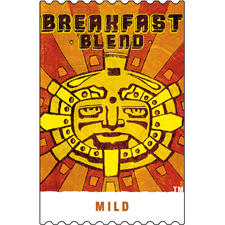
Breakfast Blend

     Acidity 3 Ways - Starbucks breakfast blend was created for the New England Region as the preferred cup was a lighter roast.  Often in the Northeast consumers usually bought their coffee the same place they bought their newspaper, milk, and gas.
      We actually did our tasting of Breakfast Blend side by side with another brand of the same style of arabica coffee. We will refer to this bag as Test#1 and Starbucks as BRK. 
     Our goal was to see the differences in the roasters palate not to pick one over the other.  As we began to bloom Test#1 in our french press, the first thing we noticed was a green aroma hinting at under roasted beans.  The brk bloomed for one minute as well it had a roasty sweet aroma but not overwhelming.  
     When the french presses completed 3 mins afterblooming we began to observe the noticeable color differences.  Test#1 was lighter in color almost like a cinnamon roast and Brk was richer in appearance.  On first sip Test#1 has a big sour acidity also referring to under roasted beans it would make you shiver and caught us off guard.  The body was thin and dissipated quickly.  As for being 100% arabica coffee the taste was reminiscent of robusto beans and tasted like a brown paper bag or wet cardboard.  As test#1 cooled off the acidity stood out even more and made the sample unbearable.  
     After sampling test#1, it really made BRK seem like it was a dark roasted coffee.  The mouthfeel was smooth with a tangy acidty.  BRK really emphasized its roast profile by showing off a medium body in the cup. We paired these coffees with roasted almonds, cinnamon chocolate loaf, and lemon sorbet.  


 Acidity in breakfast blend is an important aspect of this brew.  Acidity gives the coffee life and allows food to be paired with coffee. 

 The roasted almonds reminded us these are high quality Latin American beans that were delicately roasted lighter to achieve a milder dimension and made the Breakfast blend taste like buttered popcorn.  The 


Cinnamon chocolate loaf made the cup slightly richer and smoothed out the acidity giving it a cleaner finish.  


The grand finale was the lemon sorbet.  After taking in a spoonful, each sip of the breakfast blend sung through and reminded us of fresh squeezed orange juice, picture if you will an odwalla with a hint of coffee.  The Acidity was vibrant and danced around your tongue but was very enjoyable.  This would be a perfect tasting for educating newcomers to enjoying the sparkling finish to coffee.