Showing posts with label Latin American. Show all posts

April 27, 2014

PT's Coffee La Avila

Recently tried a small sample of PT's Coffee from Topeka, Kansas through the Craft Coffee service.

La Avila  is from Santiago de Maria, Usulután, El Salvador and is a Bourbon varietal that is farmed at 1400 meters by Lucia Abrego de Ortiz. This coffee utilizes the washed process to remove the seeds from the fruit.

Usulután is the 5th largest city in El Salvador and sits in a rich agricultural valley with a great deal of humidity.

Brewed with Hario v60 the sweet aroma filled the air nicely with baking chocolate powder and notes of steeping fresh black tea.

The first slurp reminded me of chocolate with fresh grape acidity. This brew definitely lingered with chocolate covered raisin taste and lightened as it lowered in temperature.  The acidity danced and as it cooled became more astringent with cocoa powder taste with slight peach finish.


Photo of San Salvador is courtesy of TripAdvisor.

February 28, 2014

Colombia Nariño


Coffee Loyalty- Colombia through time has always been the branded face synonymous with coffee. If Ethiopia represents royalty as the Queen of coffee and Sumatra creates a cult following with its earthy/herbal lusciousness, then Colombia truly represents adamant loyalty.


First offered in 1990 Colombia Nariño Supremo referred to the country (Colombia), the region (Nariño) and the bean size (Supremo).


Colombian coffee is often celebrated for its milk chocolate taste and dry nutty finish similar to the skin of a Walnut.


The Nariño region for Coffee in terms of Harvesting, soil composition and altitude is all about Location, location, location!


With perfect jeans and T-shirt weather (60-75 degrees) the Nariño region in Colombia has the most outstanding attributes to create an outstanding harvest.


The region benefits from a great deal of sunlight since it is located near the equator and achieves a nutrient rich organic soil composition from the Galeras volcano. A considerable amount if rainfall and mix in one of the highest altitudes in the world for growing coffee at 2300 meters (2nd to Kenya, also depends on who you're asking a Kenyan or Colombian) you have all the variables on your side to create something masterful. Tons of sunlight, the right genetic material, soil composition, and now you just need proper nurturing and pruning!


When you think about high altitude farming, consider the hot days and cooler nights that will slow down production for these coffee trees and allow for fruit with deeper more concentrated profiles.

This high-altitude theoretically would have conditions that do not favor exceptional coffee practices, however the trapped in the heat from the bottom of the valley rises as the day goes on creating warmer air turbulence in the evening so that the climate doesn't get cold overnight.


This coffee is ethically sourced working towards a preferred status through C.A.F.E practices ensuring prerequisites of quality and economic standards are met followed by social and environmental responsibility.


This is a Pre-Roast region blend that achieves with the washing process a medium body with medium acidity and can impart herbal flavors as well as rich chocolate notes and nutty finish.


- Posted using BlogPress from my iPhone

February 15, 2014

Starbucks Puerto Rico

"La Isla de Encanto"- When I think about Puerto Rico or the "Isle of Enchantment" and its roots and I can proudly embrace such a great food culture and traditions celebrated by Carne Guisada, Arroz con Gandules, Alcapurrias, and Pasteles. It brings back memories of Being in Cabo Rojo and Vieques as a child. Traditions are the spoil of our life, they connecting us to who we are, what we believe in, and strokes the emotion of the heart. Everyday at home started with either Stovetop espresso or coffee steeped stove top in a pan and filtered through a coffee sock (Woodneck pour over or Chorreador) and the coffee of choice was café Bustelo or Pilon.

The island of Puerto Rico has always flourished with outstanding pride. When I think of Puerto Rico I always think of outstanding food culture, vibrant community, pristine beaches and tradition.

Puerto Rico's coffee tradition dates back to 1736 when Spanish explorers and settlers brought coffee trees to the island. The genetic material from these coffee trees are direct descendants from trees that belong to Louis the 14th. Even though Once upon a time Puerto Rico dominated the coffee industry, Coffee production has always been a secondary classification as sugar became it's top export. Unfortunately Hurricanes throughout history have really devastated the coffee production in Puerto Rico and it really takes eight years of speculation to know if you have anything really great happening in your cup after you think about having the right coffee plant, nurturing, and labor for harvest.

Even though you can find great coffee varieties on the Island (Mundo Nuevo, Red & Yellow Bourbon, Villalobos, Caturra, Pacas, Columnaris) Rarely anymore does anyone think of Puerto Rico having such a great coffee Production culture. Climate change, Low altitude, and lack of interest from a younger generation has with increased job options have really changed the landscape over time.

The aroma in this cup really shines through with heavy Walnut/Pecan notes and subtle honey like sweetness.

The body in this cup really achieves a balanced bitter sweet taste with a delicate acidity that really doesn't sparkle or provide brightness.

I can see why this coffee has held so much pride on the island as it would be a great coffee to adulterate with cream and sugar.

January 12, 2014

Coffee Bigger than our Dreams- Hacienda Alsacia


"Its amazing what you can afford if you share Knowledge."-

On a recent trip to Costa Rica one of our support staff stated it's amazing what we can afford if we just share knowledge and it has resonated with me ever since. Coffee along with its pride and tradition needs community. No one meets over a cup of coffee to celebrate failures or disconnect friendships, instead it is a building block of friendship and a free ticket to explore the world up by geography. Coffee needs a great supporting cast to bring to life the great genetic material, soil composition, and plant nurturing. This knowledge really comes from sharing proven practices and allowing the coffee tree to be a great mother for its fruit. Just like every job and productive group I have been a part of- teaching, coaching, accountability, and integrity were the most common themes in every conversation amongst farmers and agronomist alike.

Now, going to Coffee Origin with its caring people and culture was humbling enough on its own. Every day one of my most overwhelming challenges was to truly listen and appreciate each moment as I wanted to take so many notes and document photos to show pride and joy each farmer wanted to share.  When someone is practically donating happiness it is truly hard to listen instead of celebrating and this listening was totally different, it was truly listening with empathy.

All in all listening gives respect and listening really gave me the capacity to collect the data I needed and I didn't have to write it down all I had to do was interpret it back from the heart. The journey that I am sharing with you today is what each Day meant to me down in Central America.

My shared experience started with the sense of commitment. Each farmer and the support staff were ordinary people with talent to literally change the world. The farmers stood right in the center of possibility and showed up passionately and fearlessly. They did not want to pick coffee on the plateau of a hill instead they behaved masterfully at the top of the mountain.

The greatest message I received on this journey was that of integrity. It was not only what I heard, it was also what I saw the farmer do with his hands! Each farmer played great at the fundamentals, it wasn't about the quantity of the work it was about the true quality and commitment that was shared throughout the work.

This deep emotional experience made me realize sharing coffee at its core really sparked relationships. It was not just the relationships I gained during my time in Costa Rica, it was every connection that I have had over coffee since my first coffee tasting in 2004.

I truly realize embarking on this journey definitely was not the pinnacle, however it was a midway point on my journey that truly carved out authentic excellence and shaped my imagination into what it is today.


August 05, 2013

Starbucks Caffe Verona


Caffe Verona- If a coffee can capture a snapshot of romance it would be labeled Caffe Verona. Today, passion for the culinary romance of Italy inspired the name of this full-bodied blend of Latin American and Asian/Pacific coffees. Caffe Verona is rich with a baking chocolate taste/texture and balances out with roasty sweet finish

Caffe Verona originally called "Jake's Blend" dates back to 1975 and was created for a Seattle restaurant- Jake O’Shaughnessy’s. Jake's blend was one of the first "private label" coffee offerings for a restaurant and not sold at Starbucks. Due to its popularity customers started asking for Jake's Blend and baristas would scoop the 2 coffees and label it as such. In turn, Starbucks sold enough of the coffee they began to pre-bag the coffee and labeled it 80/20 blend. Starbucks added it to the whole bean menu as 80/20 blend.


In 1987, Howard Schultz bought Starbucks coffee company and wanted to trademark the name of the coffee. 80/20 blend could not be trademarked and they renamed it Caffe Verona.


The 80/20 Blend is a "Post-Roast blend" and still follows the same recipe made from 80% Yukon Blend and 20% Italian Roast.


Post-Roast Blends start with the individual roasted coffee profiles first, then the proper ratio of each is combined to create a blend and a tapestry for the palette. It is easier to make a post roast blend as it reduces waste and maximizes individual roasts.


Literature lovers will recognize Verona as the city set for Romeo and Juliet.


July 30, 2013

Starbucks Fair Trade Italian Roast


Fair Trade Italian Roast- Tutti amano tutte le cose italiane, si tratta di raffinatezza!  The name alone enchants coffee enthusiasts to a love of all things Italian- Food, Sports Cars, Espresso and the enchantment of the Mediterranean. Like a scene out of a black and white movie this roast takes you back to a time of nostalgia. A classic moment with every sip as the beans tell a sturdy and relentless but smooth story. 

The term Italian roast really just associated with sophistication just refers to a darker style of roast. At one time, coffee roasted to the 2nd pop stage were rare to find. Typically on the east coast Italian roast is the darkest roast and on the west coast French roast represents the end of the roast spectrum.

As you look at the beans, they glisten with an oily surface representing the right amount of heat over the right amount of time showcasing a Smoky sweet cup.  The oils on the beans are significant to a dark roast profile.

 History Lesson- In the past European countries traditionally purchased inferior robusta beans and roasted them dark to mask the taste.

I appreciate the depth of a true dark roast coming from the culinary vision and finesse of the roaster.   A highly skilled roaster can control the caramelization without evoking a burnt taste.With passion and skill the they transform high quality hard beans into a dark chocolate palette with oil droplets on the canvas.

While this coffee is roasted darker than traditional espresso roast it still has the caramel sweetness. The aroma is slightly smoky and less intense than the darker roasted French roast. The aroma always reminds me of a crackling fireplace. Pair this coffee with Milk chocolate to bring out the Baking chocolate taste or some caramel chews to enhance the caramel sweetness.

Starbucks and Fair Trade:
-Starbucks is one of the world's largest purchaser of fair trade certified coffee

-Fair trade farmers are guaranteed a premium over the international market price paid for coffee

-The goal of fair trade certification is to empower small farms to invest in their farms and their communities, Protect the environment and develop business skills necessary to compete in the market

-To be certified as fair trade, coffee is to be produced only by Farmers that belong to Farmer-owned, democratically run coffee cooperatives.


-Cooperatives are formed when farmers of small-scale farms bring their resources together to obtain bargaining power and collaborate on production methods.


July 07, 2013

Nueva Llusta - Counter Culture Coffee


Coffee from Bolivia usually benefit from great altitudes and organic farming. Bolivian coffee also tend to have fruity notes and rich chocolate characteristics in the cup. Much of Bolivia’s coffee production is organized into regional cooperatives. This coffee from Las Yungas Region of Bolivia, on the Nueva Llusta farm fielding the historical Typica and Caturra varieties. 

We prepared this coffee two ways. The first (pictured) was with the Kalita Wave pour over with 32 grams of coffee (18 grind on Virtuoso) and 500 ML of water.  The second method was the AeroPress with 24 grams of coffee with 12 grind setting on Virtuoso.


With the pour over the bloom and slurry did have a sweet aroma similar to raisins.  In both brews to Baking chocolate taste stood out and had delicate finish when hot. Latin American coffees usually dominate as the coffee cools to showing off the roast profile.With the medium-coarse grind in the Kalita Wave the extremely bright acidity took over the cup as it cooled with subtle semi-sweet chocolate taste. The AeroPress really allowed for the smooth body and baking chocolate taste shine through with still a hint of the juicy acidity on the finish.

I did not experience dried cherry notes from this coffee however I did enjoy the almost raisinet taste and texture of this brew while it was hot.
I tend to get the most enjoyment from counter culture coffees with finer grinds in pour overs or espresso. We paired this coffee with chocolate which paired briliantly driving the sweetness of the Bolivian coffee. We also paired it with a "Caramel Chocolate Pretzel" Krispy Kreme doughnut. The saltiness of the pretzel and caramel sugars muted the acidity and enhanced the cup to an almost dulce de leche taste.


May 05, 2013

3 Region Blend


I remember this blend from 2011 with Beans from Guatemala that highlighted the Bourbon Species Chocolatey characteristics. Coffee from Tanzania provided Floral and lemony components. Lastly the palate pleasing Papua New Guinea adding Depth as well as herbal notes and acidity on the finish.  In years past 3 Region Blend was also classified as a bold coffee not primarily for taste but for the amount of depth and skill of the roaster.  I appreciate this roast when you understand it is a pre roast blend profile that takes in radiant heat, convective heat, and conductive heat for the right amount of time.

We prepared this years batch with a French Press, 10 tablespoons Coarse grind and 30 oz of water.

The Aroma definitely resembles the new artwork on the bag taking advantage of this blends fresh springtime qualities. Often the aroma can smell like a window basket with flowers in the distance or walking through a botanical garden. The body does not linger long however the acidity is vibrant with citrus qualities. As the coffee cools the new Guinea components begin to show with herbal finish very similar to Sulawesi coffee or Indian coffee.

We tried this coffee with Lemon loaf and cheesecake brownie.  The tasters had their "Ahh Ha" moment with the lemon loaf. One person said It reminded them of "Fruit Loops." This could be from the stone fruit like qualities of certain East African coffees.  The cheesecake brownie allowed 3 Region Blend to express its Medium sweet Viscosity and drive home the Bourbon Coffee in this blend.

March 13, 2012

Guatemala Casi Cielo

     Almost Heaven - Coffee from the Antigua region represents the best of the best!  This coffee was created in collaboration and once upon a time served at Seattle's legendary Canlis restaurant to pair with their decadent pastries and also used as espresso.  Rumor has it that at that time Starbucks had a decaf version of  Casi Cielo for Canlis Restaurant as well.
     This coffee really highlights the aspect of blending/roasting to achieve a tapestry for your palate and showcase the signature style of Guatemala.  Antigua's coffees are grown above 5,000 feet and the coffee farms are in close proximity to three of Guatemala's 37 volcanoes: Agua, Fuego, & Acatenango.  There are four farms that make up this blend and all four were chosen because each farm has a long history of high-quality coffee.  Each coffee is a Starbucks exclusive and over the years, Starbucks has supported at least one social project at each farm.
The four farms are San Miguel, Entre Volcanes (Special Reserve Estate 2001, Special Reserve 2002), Santa Clara (Special Reserve Blend 2002,2003), and Bella Vista.
     We tried this coffee in a french press and noticed the subtle floral aroma as we bloomed our grounds then prepared our press.  It is described as elegant in flavor and that's exactly how the beans flourished.  Casi Cielo was balanced, very smooth, and medium viscosity.  This coffee definitely had character and wanted to flaunt an outstanding flavor profile on the finish.  There is a tangy acidity to it but it does not over take the experience.  We tried this first with homemade Lemon Bars made by one of our partners coincidentally that day. The lemony acidity was alive, but it was sweet and showed off a different layer of flavor in this complex roast.  Now, before we tried this with chocolate we made a new batch with our chemex brewer but this time we added La Espanola Choffy to the grounds
before steeping on 7 grind.  La Espanola is coarsely ground cocoa beans from the Dominican Republic.
All we had to say was wow.  The cocoa tones and the texture of casi cielo was unreal.  The chocolate taste was astringent and decadent, paired with rocky road cake pop and we had a brownie in our cup. Cheers!

March 04, 2012

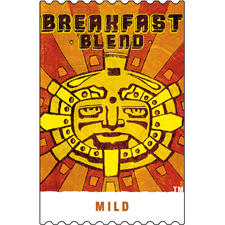
Breakfast Blend

     Acidity 3 Ways - Starbucks breakfast blend was created for the New England Region as the preferred cup was a lighter roast.  Often in the Northeast consumers usually bought their coffee the same place they bought their newspaper, milk, and gas.
      We actually did our tasting of Breakfast Blend side by side with another brand of the same style of arabica coffee. We will refer to this bag as Test#1 and Starbucks as BRK. 
     Our goal was to see the differences in the roasters palate not to pick one over the other.  As we began to bloom Test#1 in our french press, the first thing we noticed was a green aroma hinting at under roasted beans.  The brk bloomed for one minute as well it had a roasty sweet aroma but not overwhelming.  
     When the french presses completed 3 mins afterblooming we began to observe the noticeable color differences.  Test#1 was lighter in color almost like a cinnamon roast and Brk was richer in appearance.  On first sip Test#1 has a big sour acidity also referring to under roasted beans it would make you shiver and caught us off guard.  The body was thin and dissipated quickly.  As for being 100% arabica coffee the taste was reminiscent of robusto beans and tasted like a brown paper bag or wet cardboard.  As test#1 cooled off the acidity stood out even more and made the sample unbearable.  
     After sampling test#1, it really made BRK seem like it was a dark roasted coffee.  The mouthfeel was smooth with a tangy acidty.  BRK really emphasized its roast profile by showing off a medium body in the cup. We paired these coffees with roasted almonds, cinnamon chocolate loaf, and lemon sorbet.  


 Acidity in breakfast blend is an important aspect of this brew.  Acidity gives the coffee life and allows food to be paired with coffee. 

 The roasted almonds reminded us these are high quality Latin American beans that were delicately roasted lighter to achieve a milder dimension and made the Breakfast blend taste like buttered popcorn.  The 


Cinnamon chocolate loaf made the cup slightly richer and smoothed out the acidity giving it a cleaner finish.  


The grand finale was the lemon sorbet.  After taking in a spoonful, each sip of the breakfast blend sung through and reminded us of fresh squeezed orange juice, picture if you will an odwalla with a hint of coffee.  The Acidity was vibrant and danced around your tongue but was very enjoyable.  This would be a perfect tasting for educating newcomers to enjoying the sparkling finish to coffee.

February 23, 2012

Starbucks - Honduras Premier Reserve


     Great for Blending! - Tonight we got a chance to french press this excellent serving from Four coffee farms in the Los Citrines area of San Marcos, Honduras.  This coffee is grown at 3,000 feet and is classified as Arabica typica.
     As we began to lead the tasting one partner said "I never heard of coffee from Honduras!"  Man, could they have ever been so right.  Its usually very hard to find, most Honduran coffee often make their way into commercial blends.  The best Honduran coffee often are smuggled out of country and get sold as there classy neighbors, possibly a selection from Guatemala to fetch a higher price. 
     I understand for years Honduran farmers often lacked money, proper resources, and tradition to harvest their crops.  When I say tradition I am referring to lack of a household name to strengthen its image. Sometimes even after beans were picked  and processed mold would spoil lots because they were sealed in storage containers at 100 degree temperatures.  Its been 15 years since a coffee from Honduras has graced Starbucks menus but this is a grand offering from this 4,000 person town.  
     As we first took in the aroma we noticed it has a sweeter smell than most central american coffee. After we took our first slurp to get our palates ready, we really dive in and notice it has a subtle sweet finish and pleasant medium body.  Honduras Premier is very smooth and the fleeting honey notes and flavor stand out.  The acidity is different than the typical crisp, tangy, or palate cleansing qualities we are used to from Central American coffee.  The acidity in this feature allows food to be sweetly engaged on the finish. We paired this coffee with the nutty and salty flavors in an aged  Parmigiano-Reggiano Cheese drizzled with honey.  Amazing!  

February 19, 2012

Starbucks Espresso Roast

Created in 1975 to compliment milk.  Starbucks Espresso roast is the center of attention and responsible for creating a variety of crowd-pleasing specialty beverages actually, 65% of Starbucks drinks are created with it.  The first store to create an espresso beverage for Starbucks was on 4th and Spring in Seattle for you history buffs.
     My Favorite is to have this espresso roast in a french press. This roast is darker than most traditional espresso it has a dark but sweet aroma, it is very smooth with a soft acidity.  The roasty taste lingers on your tongue and it developed a caramel sweetness as it cooled.  We paired it with Kraft caramel chews, but if your in a Starbucks store get a spoonful of caramel sauce and pair with a shot of espresso.

Espresso - 15 seconds of energy

     Italians love coffee and we love all things Italian.  Espresso came to its greatest glory during time of invention in Italy.  Remember, Espresso is not a roast but a way of processing coffee.  Espresso shots get the most out of every bean and a coffee masters excellence begins with a shot of espresso.
     Shots of espresso are created by forcing pressurized hot water @ about 190 degrees through fine grounds to emulsify the oils and proteins found naturally in coffee. One shot of espresso is solids dissolved in liquid, solids suspended in liquid, and oils suspended in liquid.  Espresso shots roll on your tongue like a tide coming in and linger for 20 minutes packed with 75mg of caffeine.
     There are 3 parts to a perfect shot of espresso, the crema, body, and heart.  The crema is the holy grail of espresso, most companies use robusta coffee to get crema.  Some high end retailers such as Starbucks do not use robusta at all.

February 12, 2012

Tribute Blend

     Had a sneak preview tasting of this 2nd year offering and its full of flavor.  There is sound history in this cup for Starbucks. Each of the 4 components were selected to represent a different aspect of the company's past.
     The natural processed Ethiopian coffee in this blend give it its berry flavor with hints of rum. Harrar & Shirkina were selected for its close collaboration with Ethiopian farmers.  The tangible broken pieces of Aged Sumatra were selected by the work it takes to age coffee typically 3-5 years in Singapore. The aged Sumatra adds spice, depth plus a syrupy body.                
     This coffee also packs large Colombian beans selected for sbux because it was where the 1st contribution to social projects took place. Colombian beans are typically used for blending but, Papua New Guinea beans give this coffee life by adding acidity.  Papua New guinea was selected because it was one of the first coffees offered on their menu.
     We paired this coffee with dried golden raisins and cranberries, but it also pairs with chocolate and spice, such as an oatmeal cookie or pumpkin pie.